Reading Cove
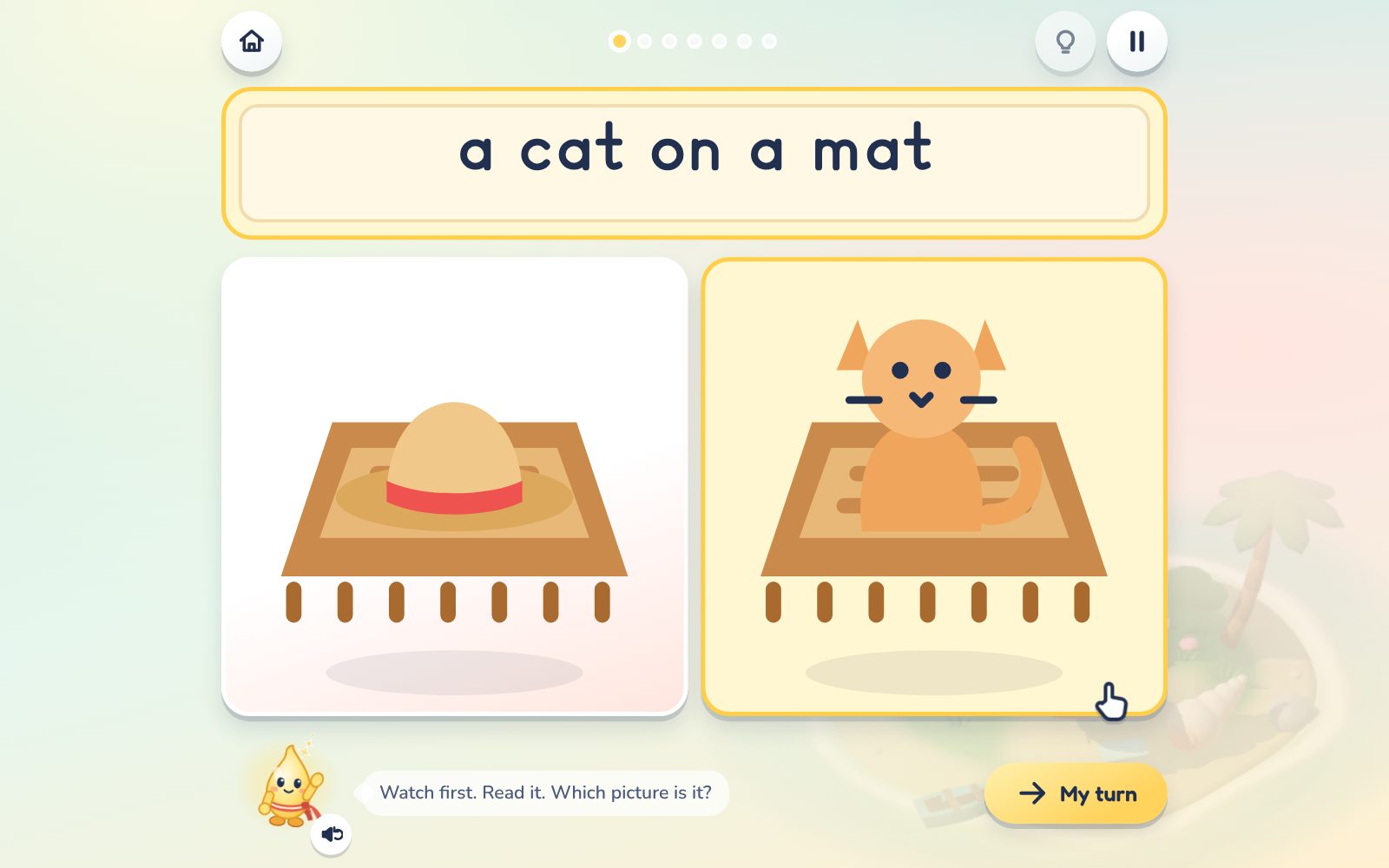
It starts with listening: what made that sound, which words rhyme, how many beats a word has. Then come letter sounds, blending sounds into words, building words and a short sentence to read.
SIDE QUEST / EARLY LEARNING / AGES ~3½–6
Training Academy is a storybook game for kids about 3½ to 6. A little guide called Glim rows a boat between six islands and a lighthouse. Each place trains a different kind of thinking: sounds and letters, numbers, planning, memory, building and testing, stories and maps, and music. A child who can’t read can play all of it. Glim shows each thing first, every instruction is spoken, and everything works with a tap.
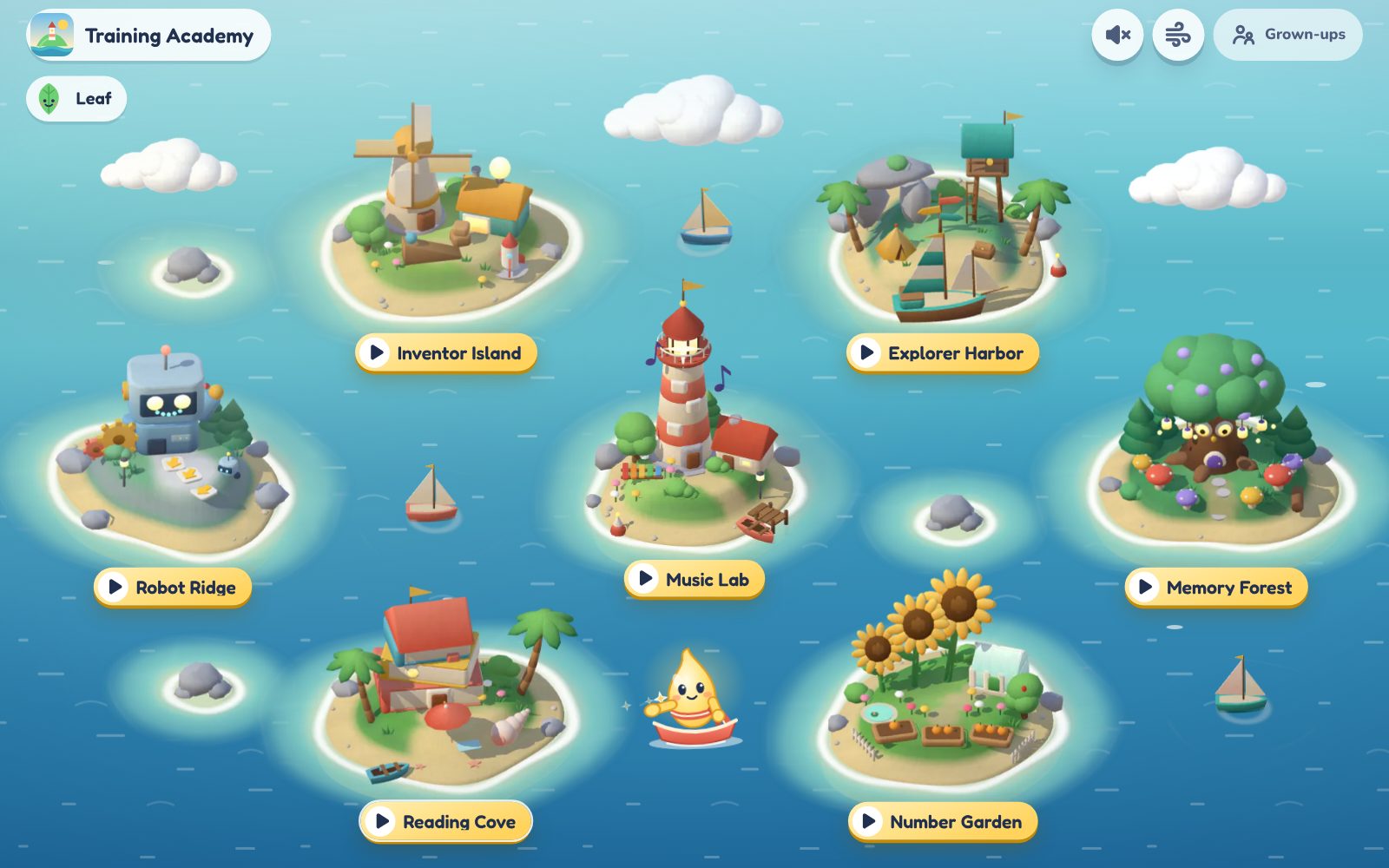
Training Academy is its own app at its own web address, so a child's record stays in that app's corner of the browser. There's nothing to install and no account. After one visit it works offline, and you can add it to a phone's home screen.
Open it and tap a picture to say who's playing. Glim, the guide, shows how to play, and then you're on the islands. Tap Number Garden and press Play. When it's your turn, give a wrong answer on purpose and watch.
→ No red X and no lost life. Glim counts it out with you, then sets that one aside.Every world starts from nothing. It doesn’t expect a child to know letters, numbers past a few, or how a game works. There are 71 short activities, each two to five minutes long, with 823 challenges in all. A checker throws out any challenge whose answer isn’t the only right one.
It starts with listening: what made that sound, which words rhyme, how many beats a word has. Then come letter sounds, blending sounds into words, building words and a short sentence to read.
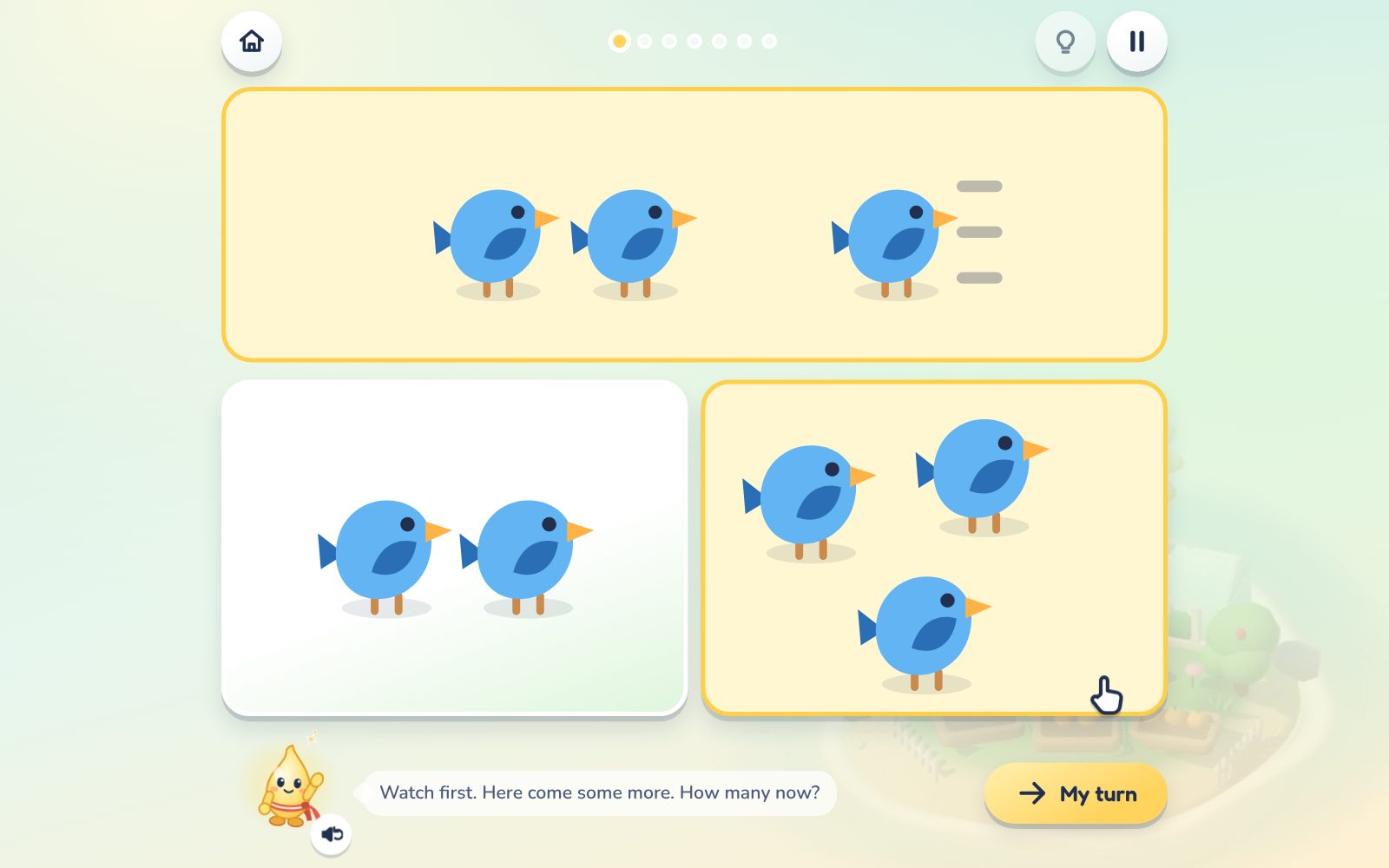
Kids match amounts, see how many at a glance and hand out one for each, with no written numbers at first. Then come numbers up to ten, the number path, and adding and taking away as little stories.
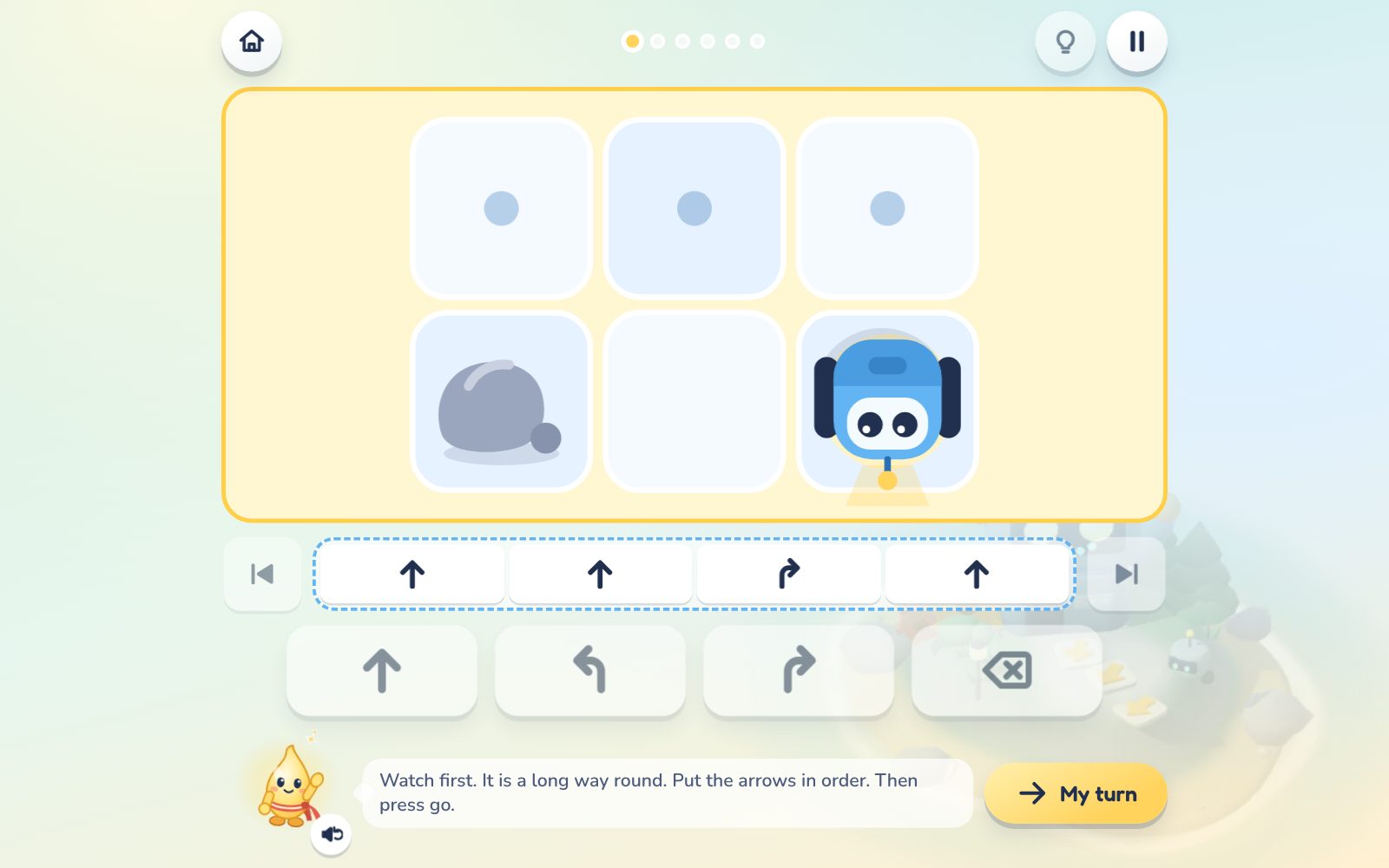
Kids steer a robot with arrows: one arrow, one move, then a row of steps. They repeat a pattern, find the step that went wrong and plan a long way round. One puzzle has a bridge to wait for.
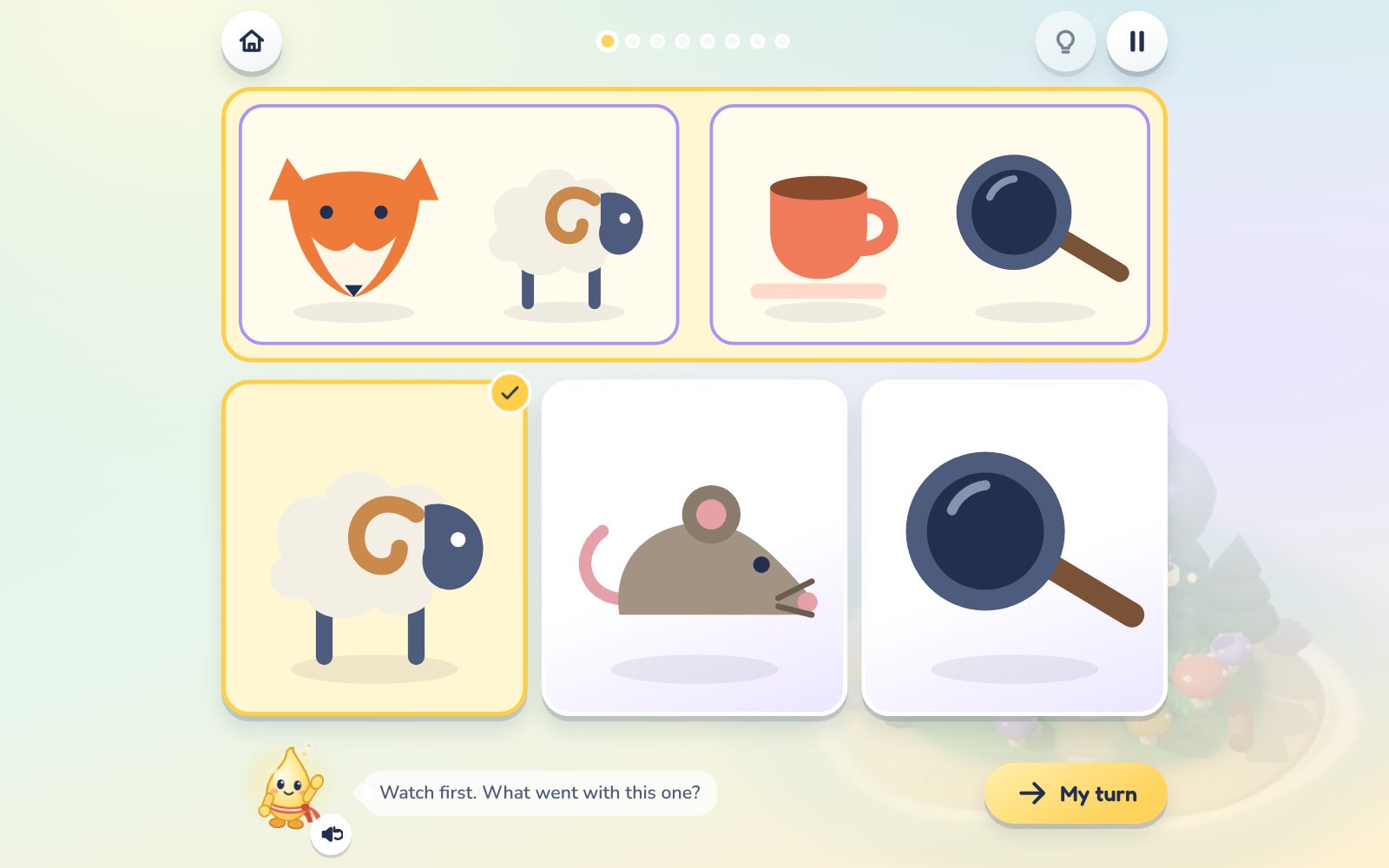
Pairs, a missing thing and an order to repeat. Then three tricks for remembering: groups, a silly story and places along a path. Kids pick the trick they like, and three things are saved to ask about next time.
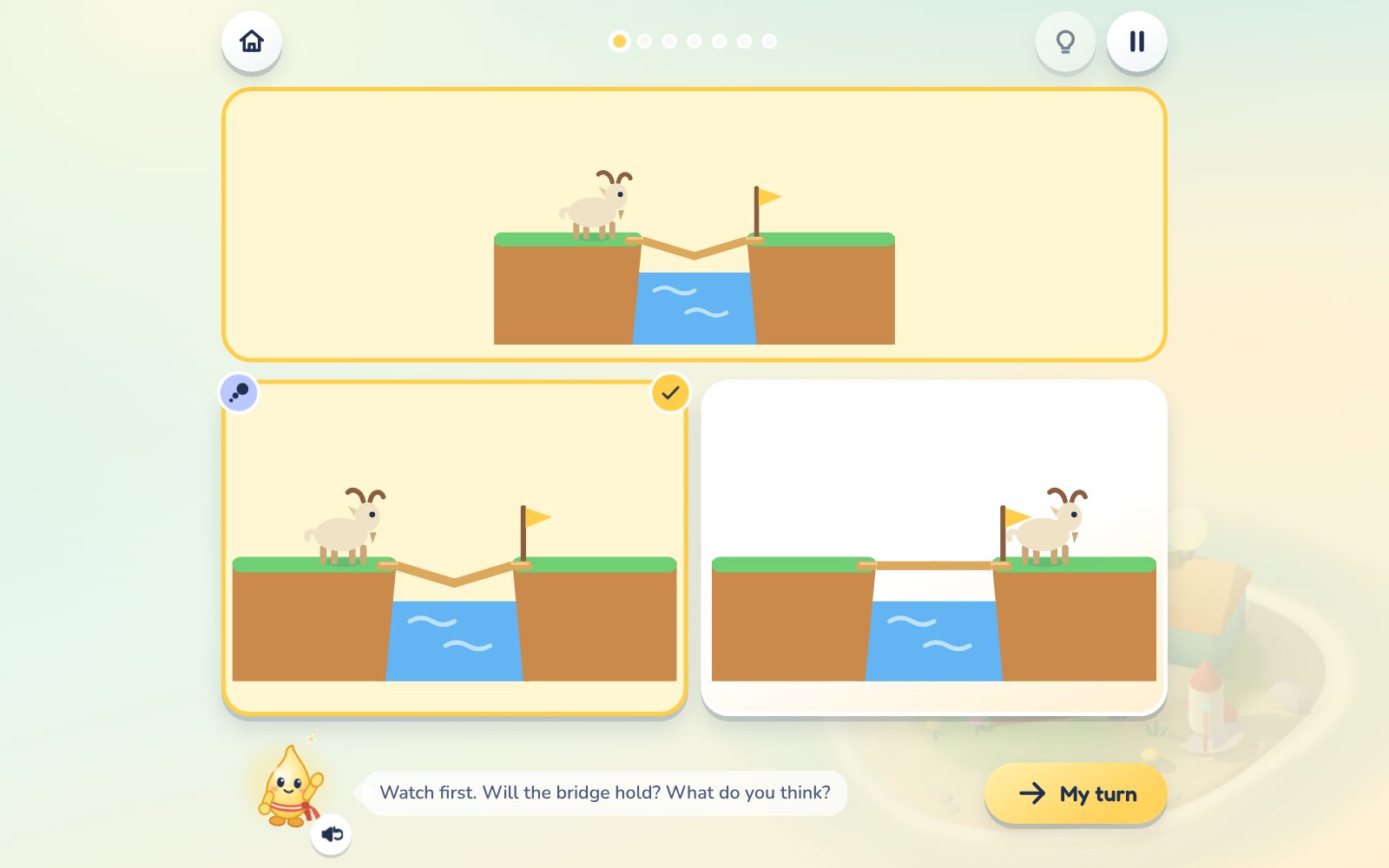
Make a guess, then watch it get tested. Does the bridge hold? Will it float? Will the wall keep the wind off? Then mend it and test again. Each one comes with something to try with real things, away from the screen.
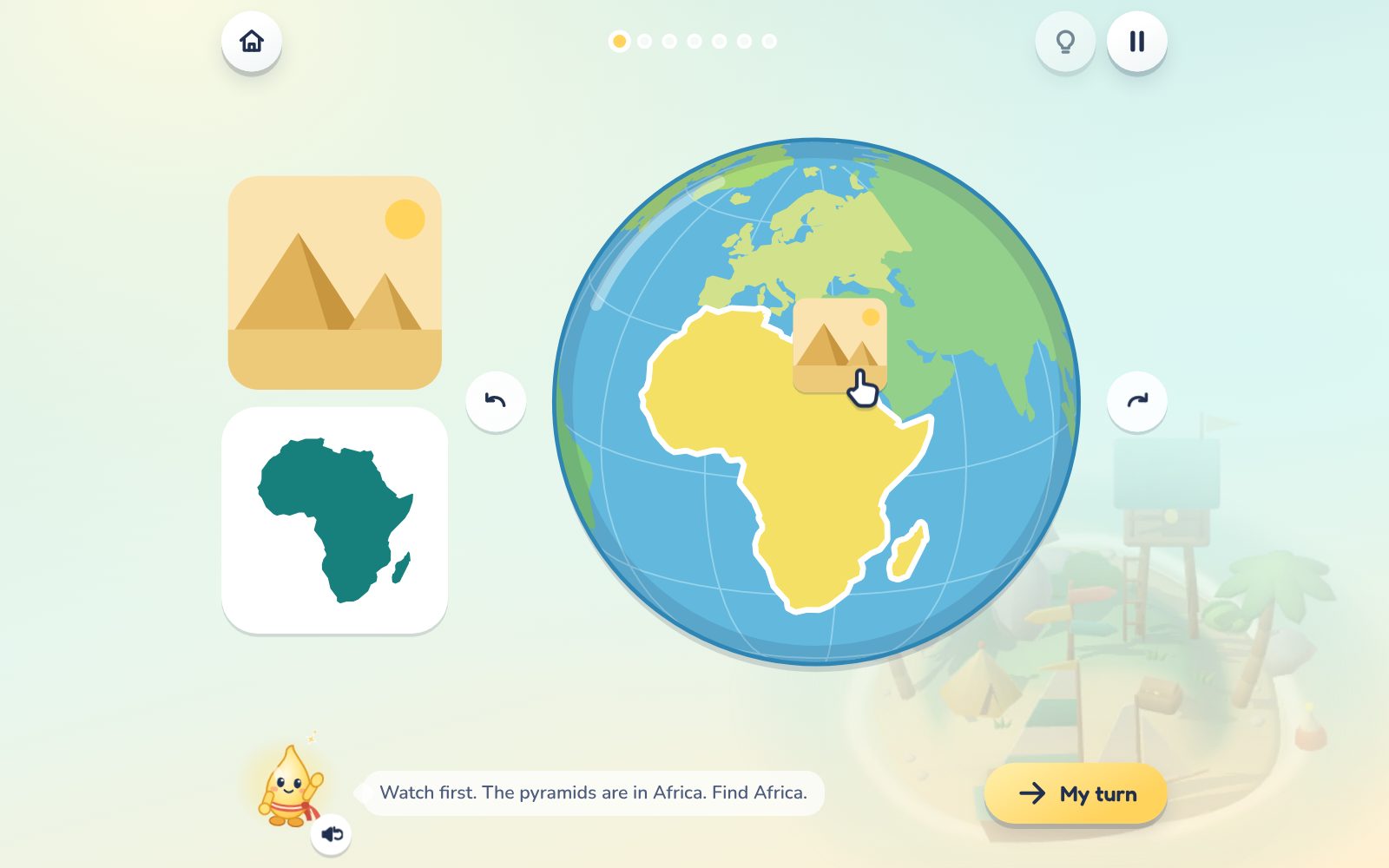
Put a story in order and guess what happens next. Find land and water on a map. Then spin a globe with no words on it to find the seven big lands and 15 famous places. A story room lets kids make a little book of their own.
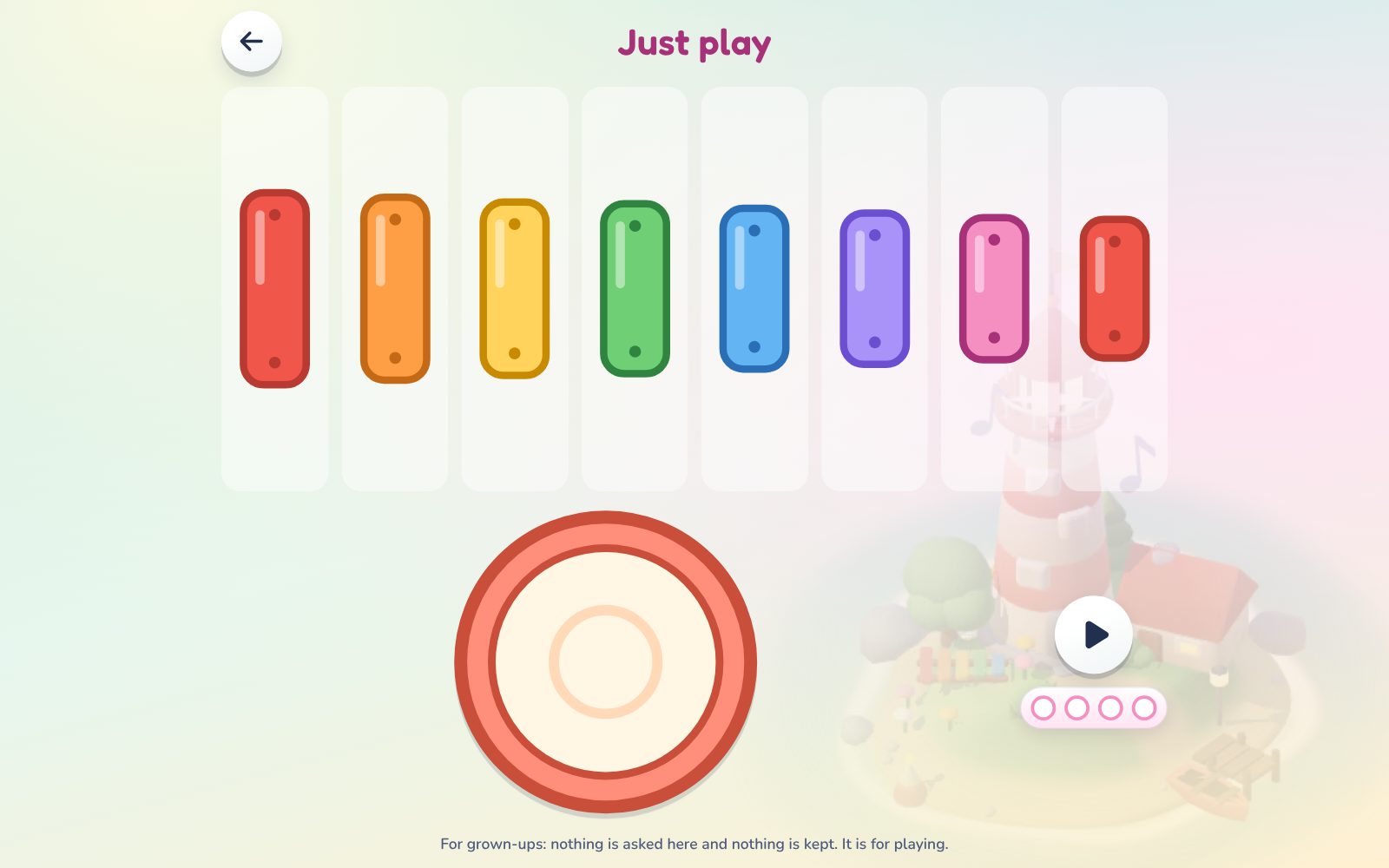
High and low, the same or different, a beat to tap along with, notes to play back and a tune to make up. A room of chime bars and a drum is there to play with freely. Every note is made on the device.
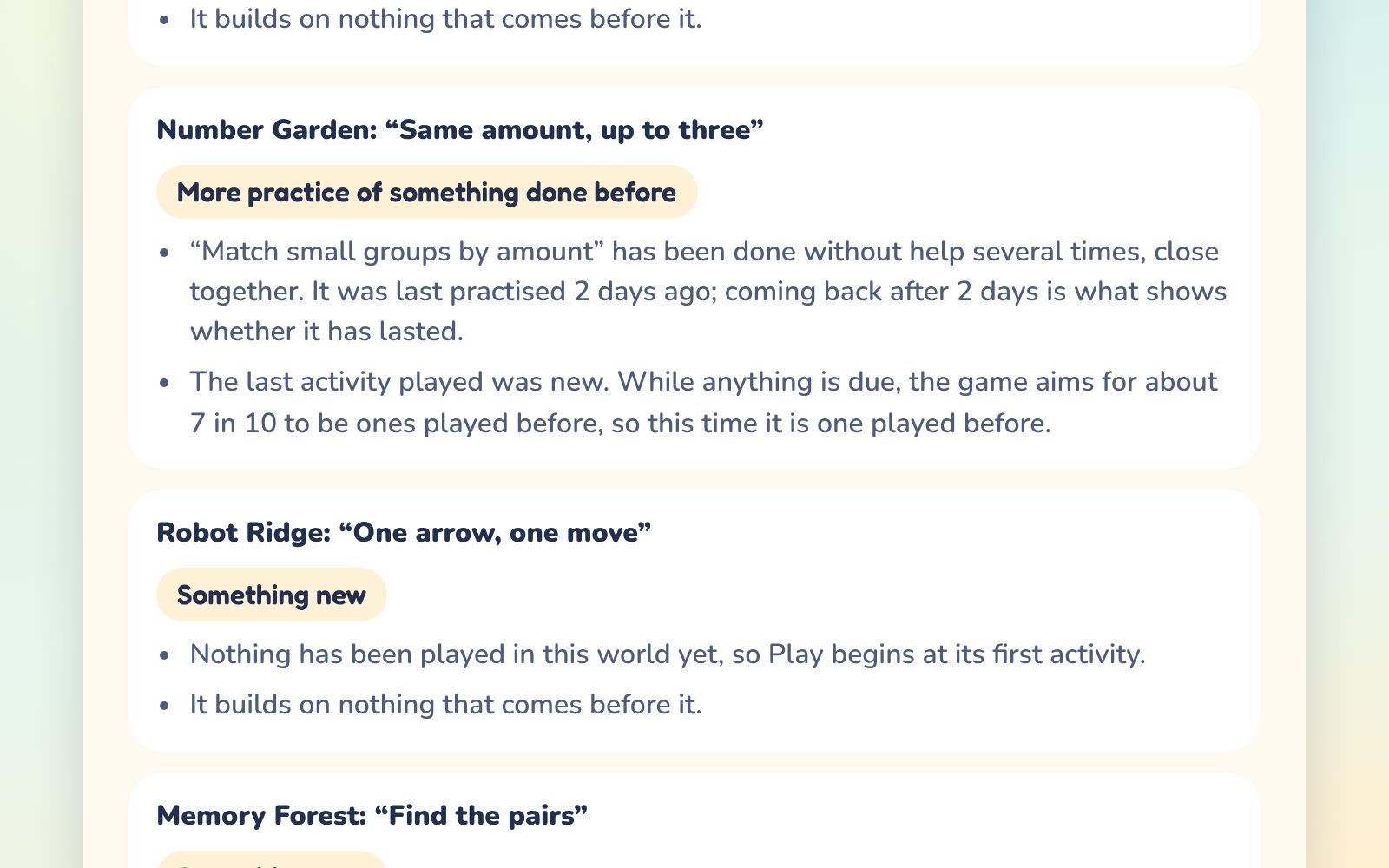
Behind a two-second press, grown-ups can see what each child has done alone, and why the game suggests what it does. Here, an activity comes back after two days to check that it lasted.
Every activity runs the same way. Glim shows it first. Next the child tries a couple with help close by. Then they try a few alone. Here’s the very first one, about matching small groups.
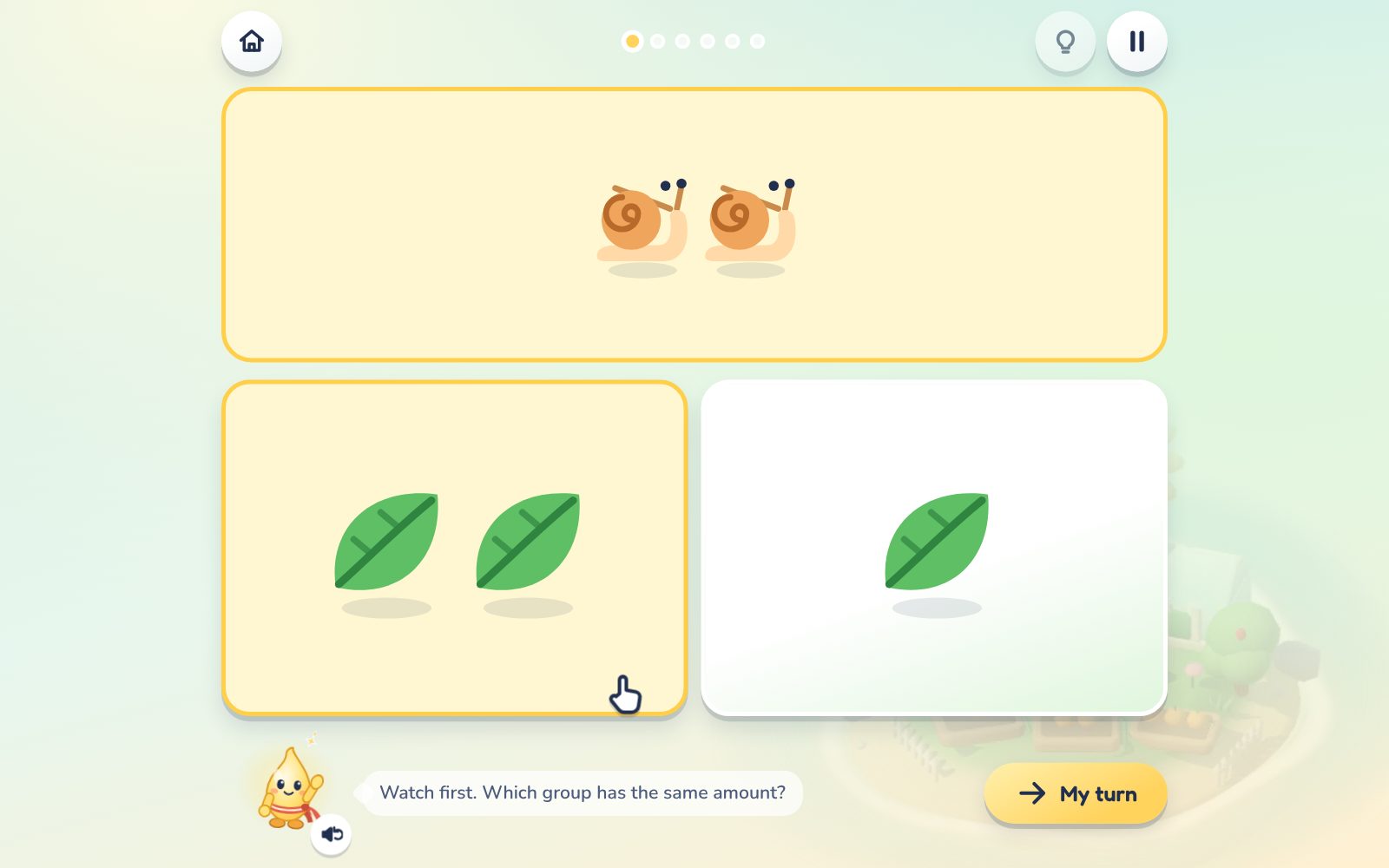
Glim counts the snails one at a time, then the leaves that match. Nothing can be answered yet. When the child is ready, they press My turn.
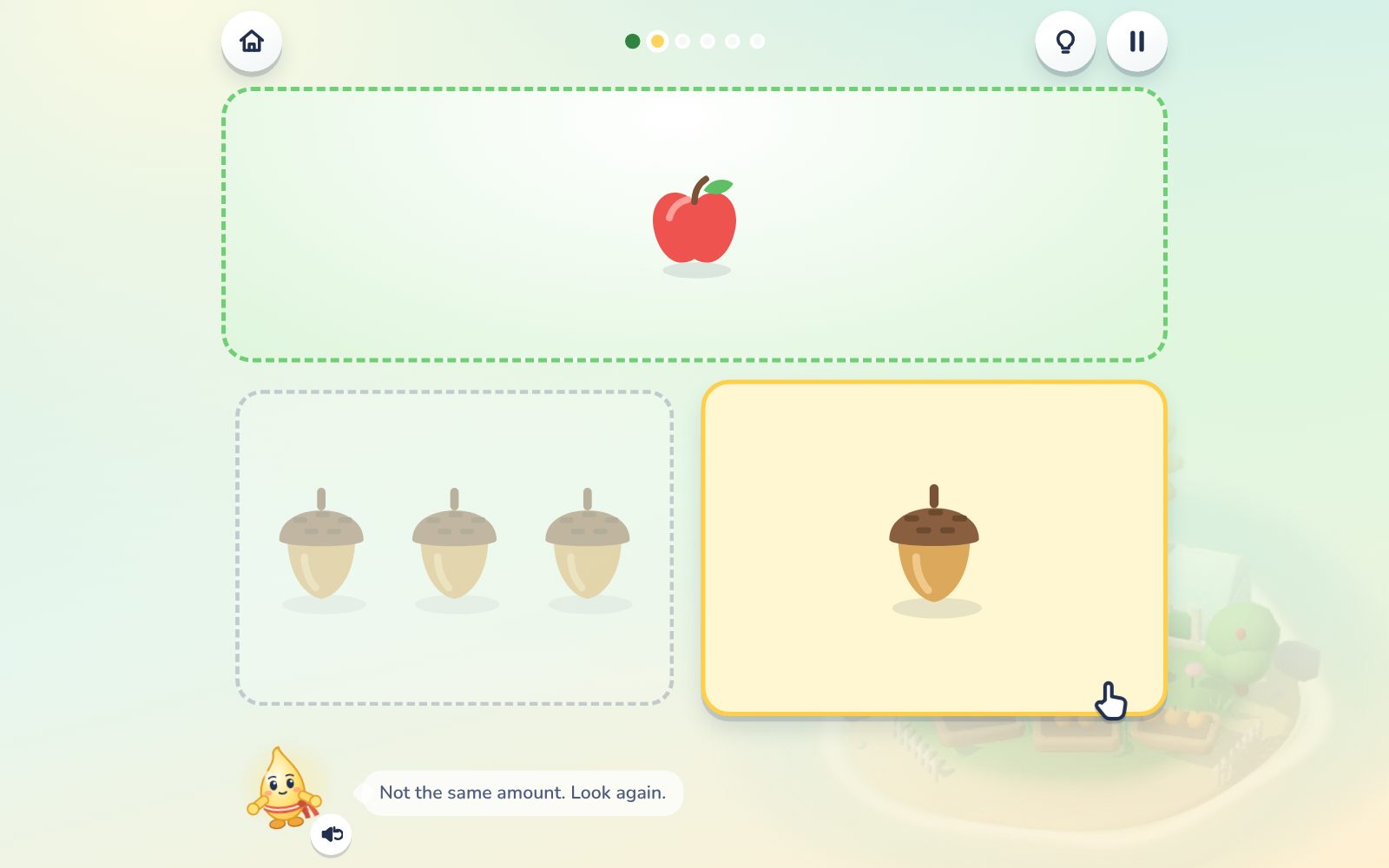
Three acorns for one apple? Glim counts both groups, one note for each thing, so the child can hear they don’t match. Then that choice fades away. No red, no cross, no shake.
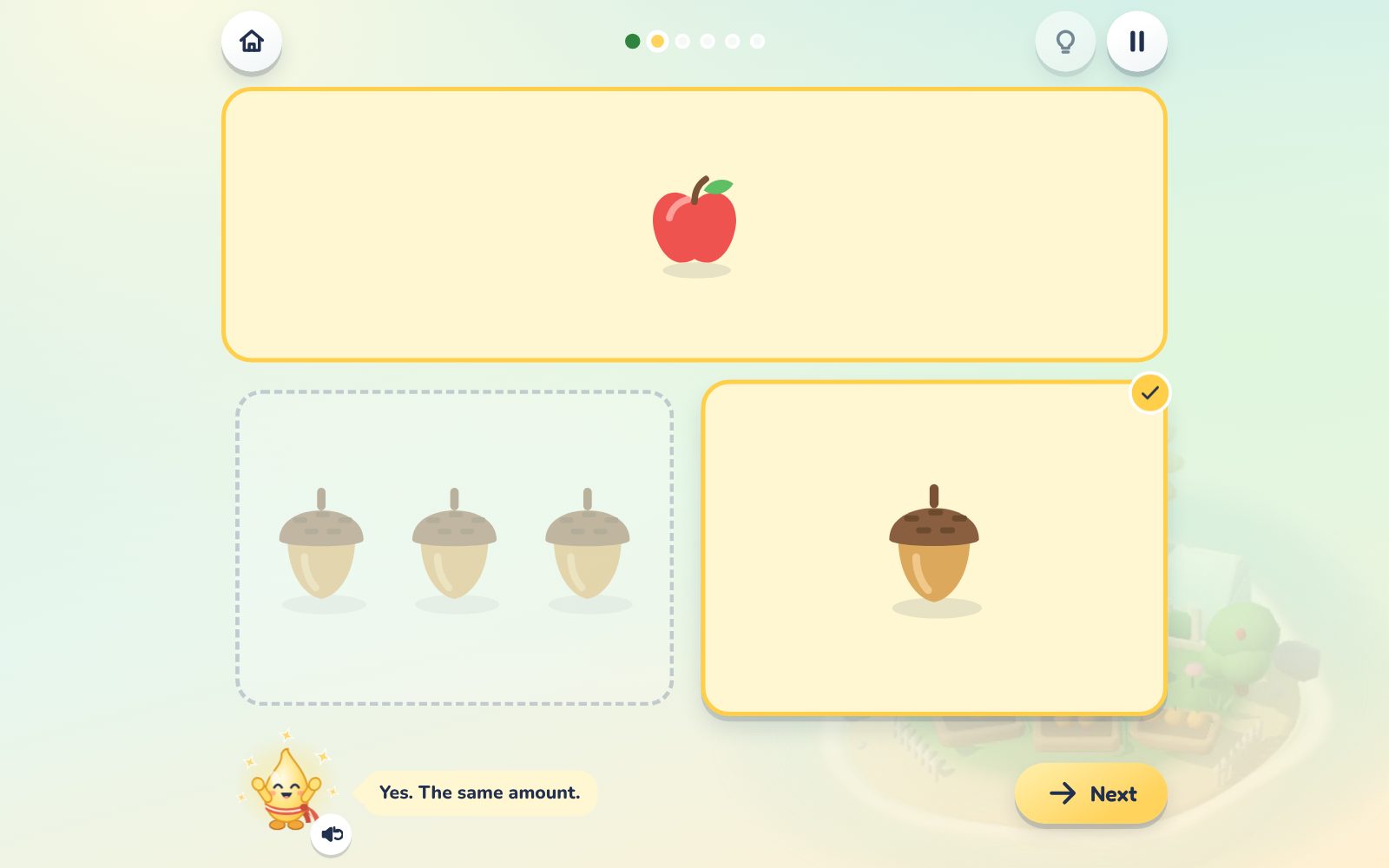
One apple, one acorn. Both groups are counted with the same notes and light up together, and Glim does a little hop. The feedback shows why the answer works.
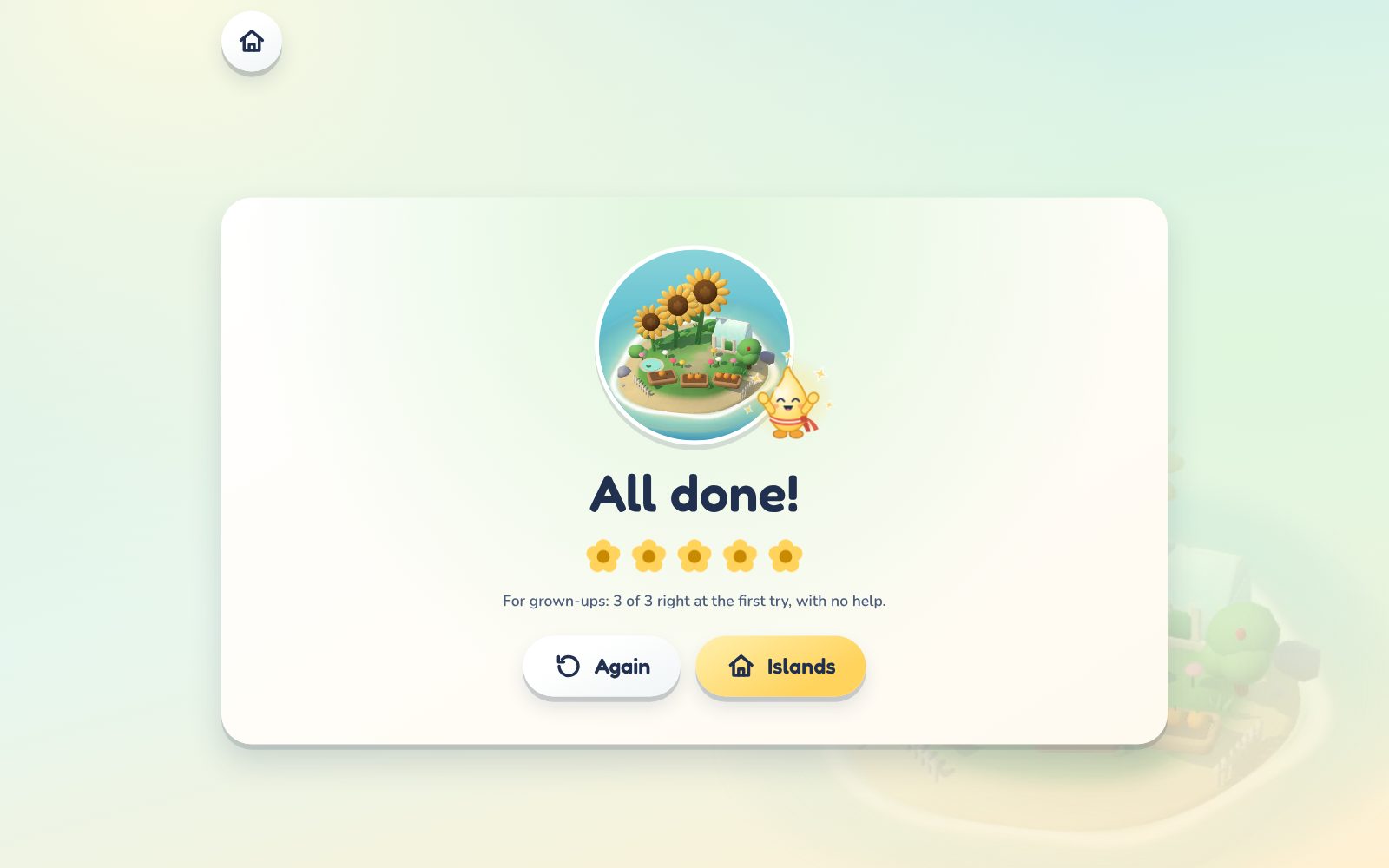
A flower for each thing done, then Again or back to the islands. One small line tells grown-ups how many were right at the first try, with no help.
Most of these choices come from research on motivation, memory and how young kids learn. The research itself is in the write-up.
Kids don’t answer questions about a robot. They steer one. They don’t read about bridges. They guess whether one will hold, then watch it get tested. The thinking is the action, so getting it right is the fun part. Glim is never sad or cross. A wrong answer gets a tilt of the head and some patience.
There are no timers, lives, points, stickers, streaks, leaderboards, ads, purchases or accounts. Nothing is ever locked, so a child who needs help can still play everything. A grown-up can set a sitting of about 10, 15 or 20 minutes. When time’s up, Glim falls asleep on the map and stops suggesting more.
Answers given after a hint, or with a grown-up helping, are kept apart. Luck counts too. With two pictures to pick from, half of all taps land on the right one. So a skill only shows as “independent” once the first tries are too good to be luck. Grown-ups see plain sentences, never grades, scores or age levels.
The big Play button suggests something new or something due for practice. A skill done alone comes back the next day, then after longer and longer gaps, up to two months. While anything is due, about seven in ten suggestions are review. No more than one a day is something that went badly last time.
A player is just a nickname and a picture. No real name, birthday, photo or voice is asked for. Nothing is sent anywhere, and the game’s own tests fail if a page tries to reach another website. Grown-ups can save a copy, load it on another device or erase everything.
I wrote a 17-part plan, with rules like “show before asking” that every part had to follow. AI coding agents built it one part at a time, and each part had to pass automated tests and a screenshot review. The voice was made with a speech synthesizer. It still needs a careful listen to every line, more real phones and time with real kids. No study has checked how much kids learn from it. The code is public for anyone to read.